


VR taekwondo is changing combat sports in Southeast Asia
Vietnamese athlete Nguyen Thanh Hien Linh entered her first virtual taekwondo competition in Singapore in 2024 with little understanding of how the format worked. She was already an elite national taekwondo champion, but the digital version of the sport was unfamiliar and difficult to read. At the time, she described herself as kicking into empty space, with no clear sense of strategy, technique or the technology behind it.
Two years later, she won gold at a recent virtual taekwondo competition in Malaysia and became part of a growing community around the gamified combat sport across Southeast Asia. What was once seen as experimental has developed into a more organised competitive discipline. It is co-developed by World Taekwondo and Singapore-based technology company Refract Technologies. The format combines virtual reality with traditional taekwondo techniques to attract younger, technology-focused athletes.
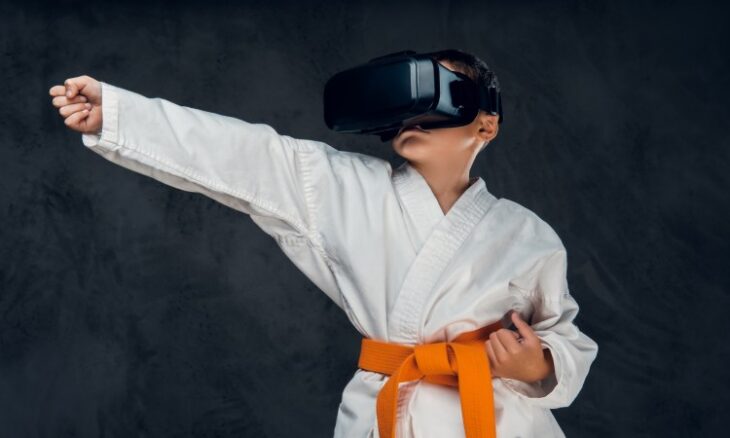
Competitors wear VR headsets that place them inside a digital 3D arena. They also wear motion-tracking sensors on their backs, thighs, and shins. Their body movements control digital avatars in non-contact matches. Each fast and accurately timed strike reduces the opponent’s virtual health bar. Unlike conventional taekwondo, in which athletes are grouped by age, weight and gender, virtual taekwondo places all competitors in the same digital arena.
The sport was shown at Singapore’s Olympic Esports Week in 2023 and held its first World Championships in Singapore in 2024. This year, it is due to make its debut at the Asian Games in Japan. It is also expected to be included in the 2027 Southeast Asian Games in Malaysia, underscoring its growing regional profile.
At last month’s Malaysian competition, athletes and coaches described how the discipline is changing perceptions of both martial arts and gaming. Singapore national athlete Brian Peh, 46, said he was not interested in gaming before taking part in the 2024 championship with his son. He joined out of curiosity. Both won gold and have since taken part in a range of local and regional games.
Peh now coaches virtual taekwondo students at his dojang, or training hall. He tells parents that their children already like games and asks whether they should use their hands or their legs to play. The experience becomes highly energetic once they put on the headset and begin fighting, and they enjoy continuing for long periods.
Cambodian coach Vandy Yiv said interest among children and parents in his country has grown because the risk of injury is low. A local tournament earlier this year drew more participants in virtual taekwondo than in the traditional segments. Many people first assumed it was a video game, but then realised it was physically demanding. He described the sport as one in which the whole body is moving, with action but no injury. He hopes it can become an Olympic medal event in the near future.
Some athletes said their first experience felt disorienting and that they felt dizzy before adjusting to the virtual environment. Others, especially teenagers, were drawn in quickly by the gamified format. Bouts are intense and fast, with each round lasting only one minute. The format’s pace helps explain its appeal.
Nguyen said success did not come from simply throwing kicks. She said the key was to judge where the opponent was and move before the opponent did. Her experience showed that the virtual version requires more than only physical motion.
Although the matches take place in an immersive computerised setting, coaches say success still depends as much on physical preparation as on technical skill. Athletes continue to use front kicks, turning kicks and spinning techniques. The key difference is that success depends on the speed of execution rather than the impact force.
Malaysian coach Henry Lee said training begins with stamina, muscle stamina and flexibility before moving on to skills and strategy. He said strength in the sport is measured by how fast the leg can lift and strike, and that speed becomes power. Lee, who is also an elite national taekwondo athlete, said he looks for players with strong physical attributes and good game sense. He defined it as the ability to read movement and make instant decisions in a virtual environment.
One of his students, 12-year-old Victoria Siow, said the difficulty lies in judging space that cannot be seen physically. The sport requires mental work on timing and distance. She described it as feeling like a game and a dream at the same time.
For Raja Mardiah Idris, 45, who trains at the same club, virtual taekwondo has created opportunities that traditional sparring could no longer offer. It allows older athletes and women to compete safely and on equal terms. Her young daughter has also taken to the sport as a healthy alternative to digital devices.
Raja, a member of a state royal family, said that when athletes wear VR headsets, everyone is the same. She said victory depends on technique, strategy and fitness. She said she plans to stop full-contact kyorugi sparring and focus fully on virtual taekwondo. She continues to run and train in the gym to stay strong and hopes to represent Malaysia in the sport at the SEA Games next year.
Malaysia’s national virtual taekwondo coach Tony Lee said the sport remains in its early stages. He said equipment costs are high and access in the region can be limited. He also said growing interest should push clubs to invest. Malaysia now has national programmes and coaching certification courses in place, helping support its expansion.
Tony Lee said virtual taekwondo is the future because young people like gaming, and that is why it is drawing interest.


